Balance and Mobility Exercises for Seniors: Best Exercises to Improve Stability

As we get older, maintaining good balance, mobility, strength, and coordination becomes increasingly important for staying active and independent. Regular balance and mobility exercises for seniors can help you maintain lower-body strength, improve movement, build confidence, and support everyday activities.You do not need an intense workout or a gym membership to work on your balance. Many balance exercises for seniors at home can be performed using a sturdy chair or countertop for support.At Senior Gentle Fitness, we focus on gentle, low-impact exercises designed for adults over 50. Whether you are a beginner, want to improve your mobility, or are looking for simple ways to stay active at home, these exercises can help you build a consistent fitness routine.

Safety first: Balance exercises can challenge your stability. Always exercise in a clear, safe area and keep a sturdy chair, countertop, or other stable support nearby. If you have significant balance problems, a recent injury, or a medical condition that affects your mobility, speak with a qualified healthcare professional before starting a new exercise program.

Why Are Balance and Mobility Exercises Important for Seniors?

Balance and mobility work together.

Balance helps you maintain control of your body while standing and moving, while mobility allows your joints and muscles to move through comfortable ranges of motion.

As we age, changes in muscle strength, flexibility, coordination, vision, and physical activity can affect balance and movement. Regular balance training for seniors, combined with strength and mobility exercises, can help support physical function and independence.

A balanced senior fitness routine can include:

The goal is not to perform difficult movements. Instead, focus on controlled exercises that match your current ability.

Benefits of Balance Exercises for Seniors

Regular balance and mobility training may help you:

  • Improve balance and coordination
  • Strengthen your legs, hips, and core
  • Improve mobility and flexibility
  • Support better walking stability
  • Improve body awareness
  • Build confidence during everyday movement
  • Support independence as you age
  • Maintain an active lifestyle

Balance exercises can also complement other senior-friendly activities such as walking, chair yoga, resistance-band exercises, and low-impact cardio.

Best Balance and Mobility Exercises for Seniors

1. Heel-to-Toe Walk (Improves Walking Stability)
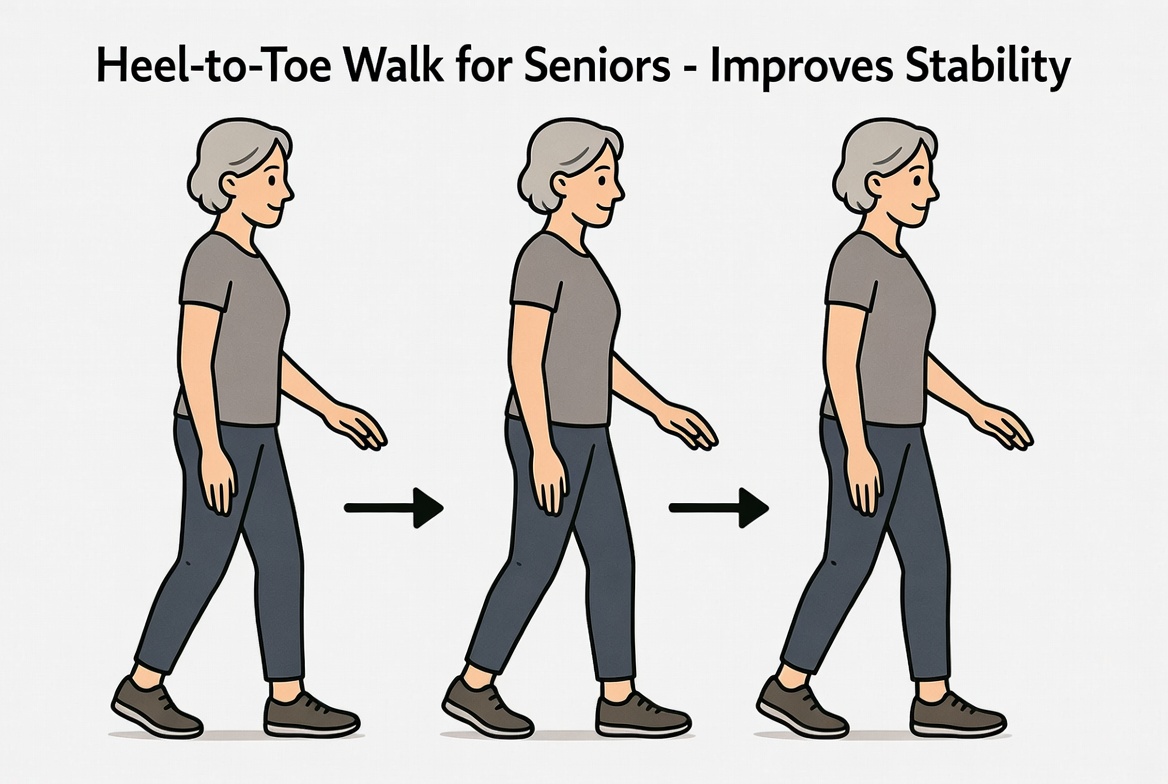
Walk in a straight line by placing the heel of one foot directly in front of the toes of the other foot. Keep your eyes forward and move slowly.

Benefits: Enhances coordination and balance control.

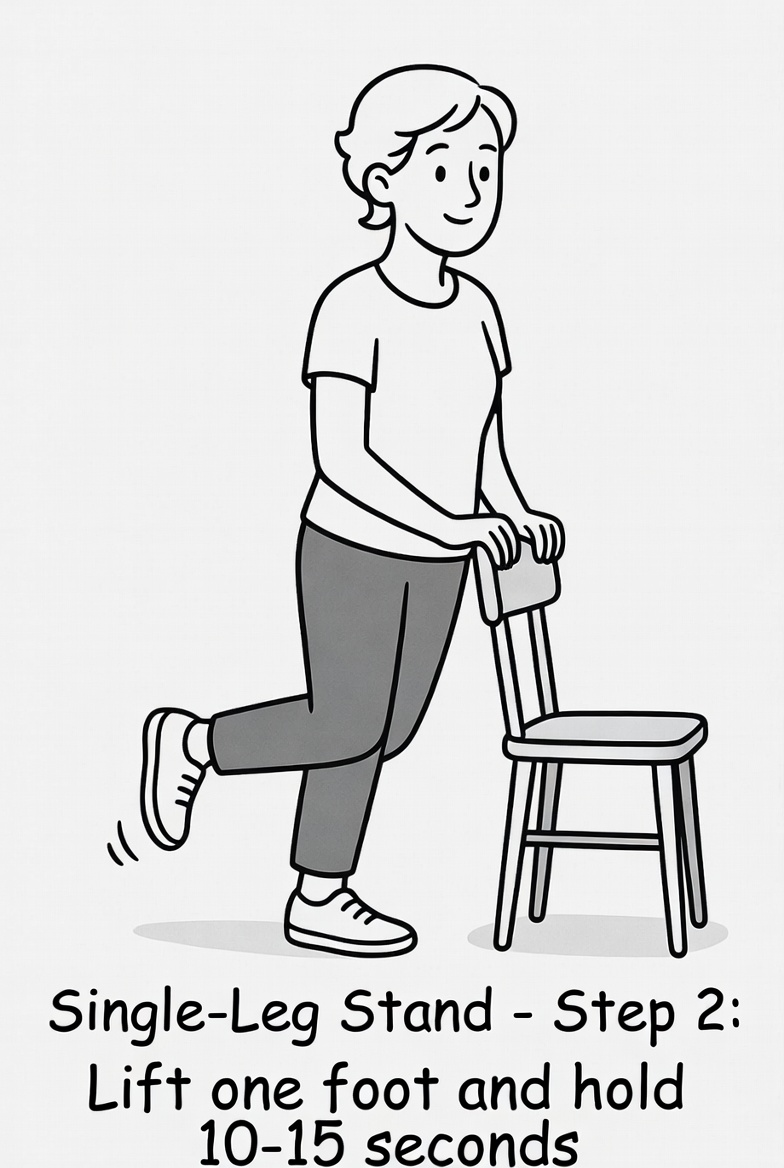
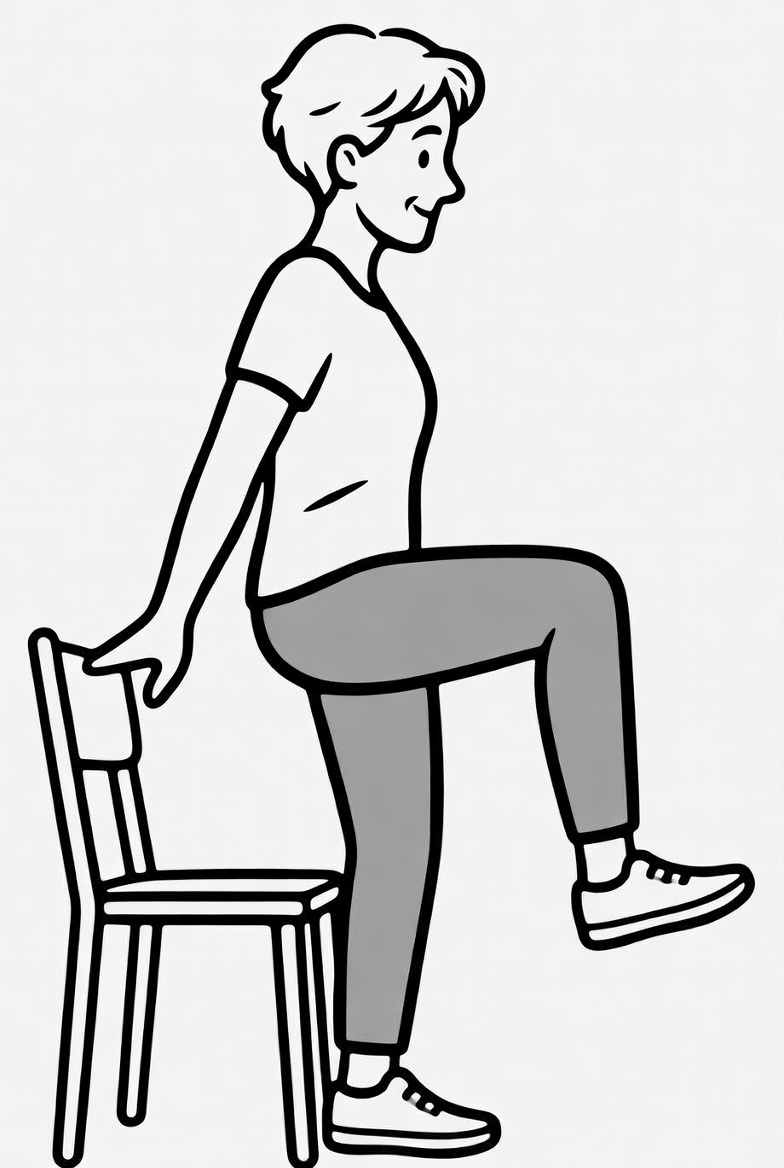
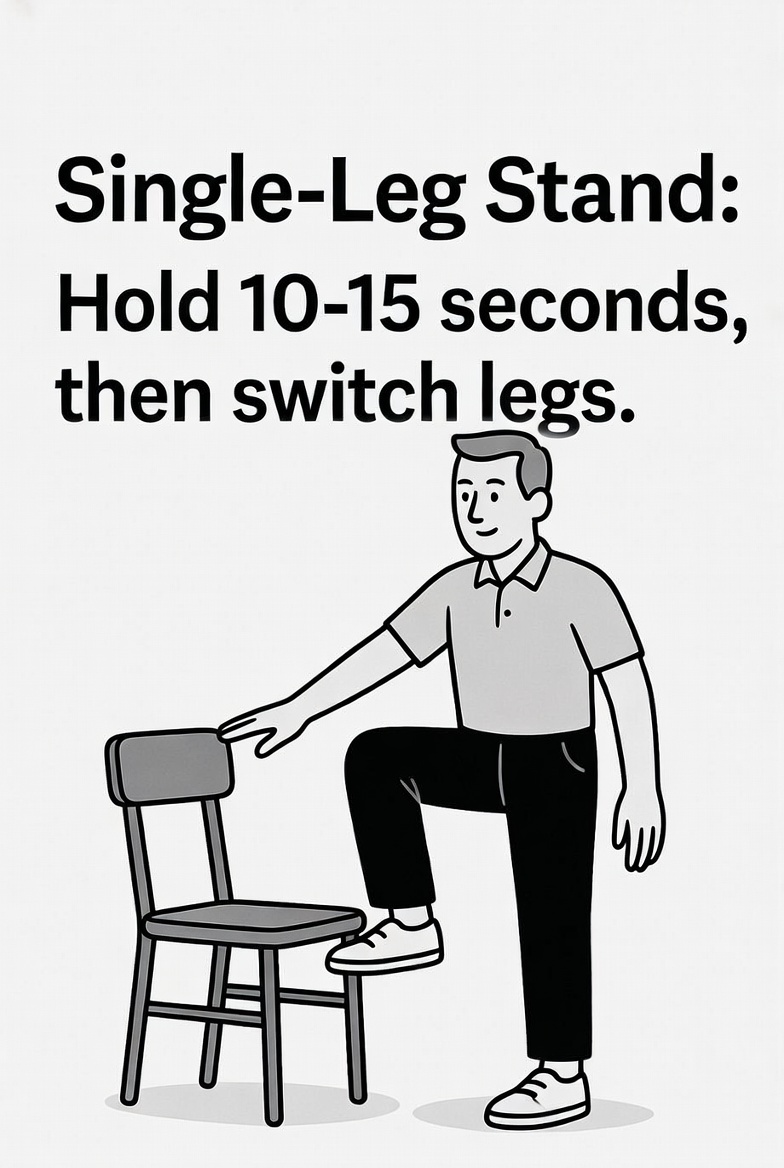
2. Single-Leg Stand (Builds Balance Strength)
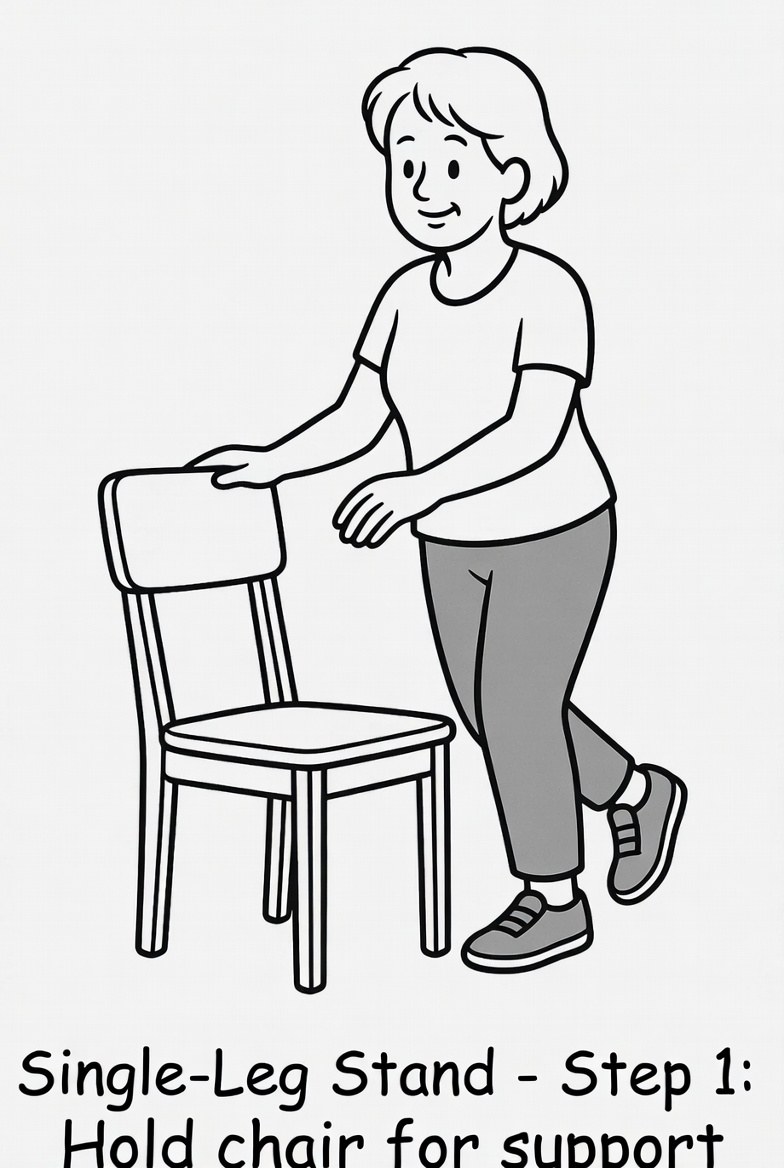
Stand behind a chair and hold it for support. Lift one foot off the ground and hold for 10–15 seconds. Switch legs.

Benefits: Strengthens leg muscles and improves stability.

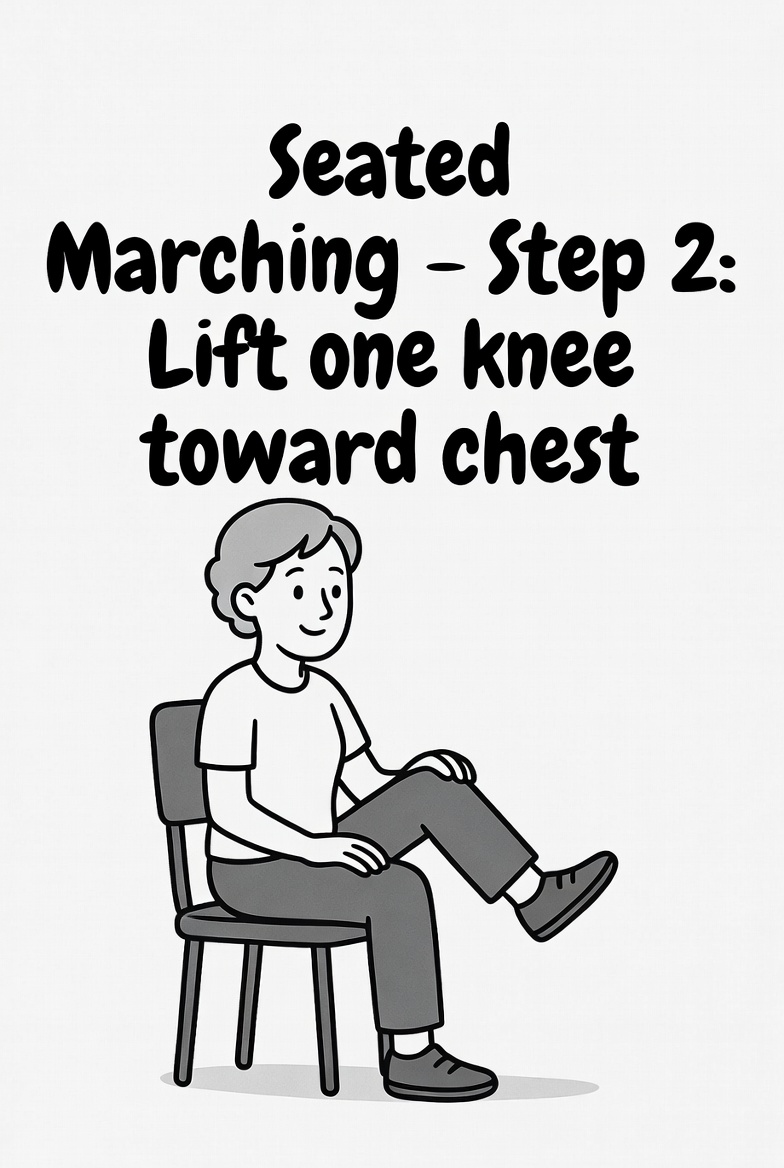
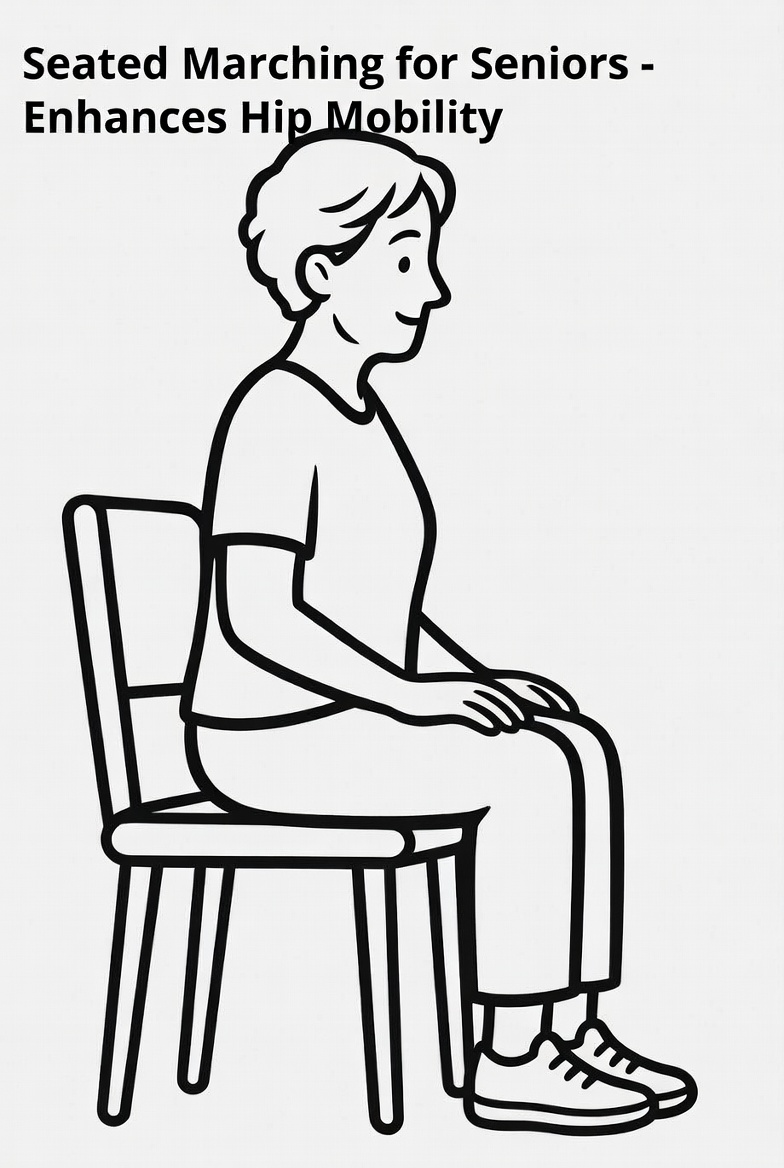
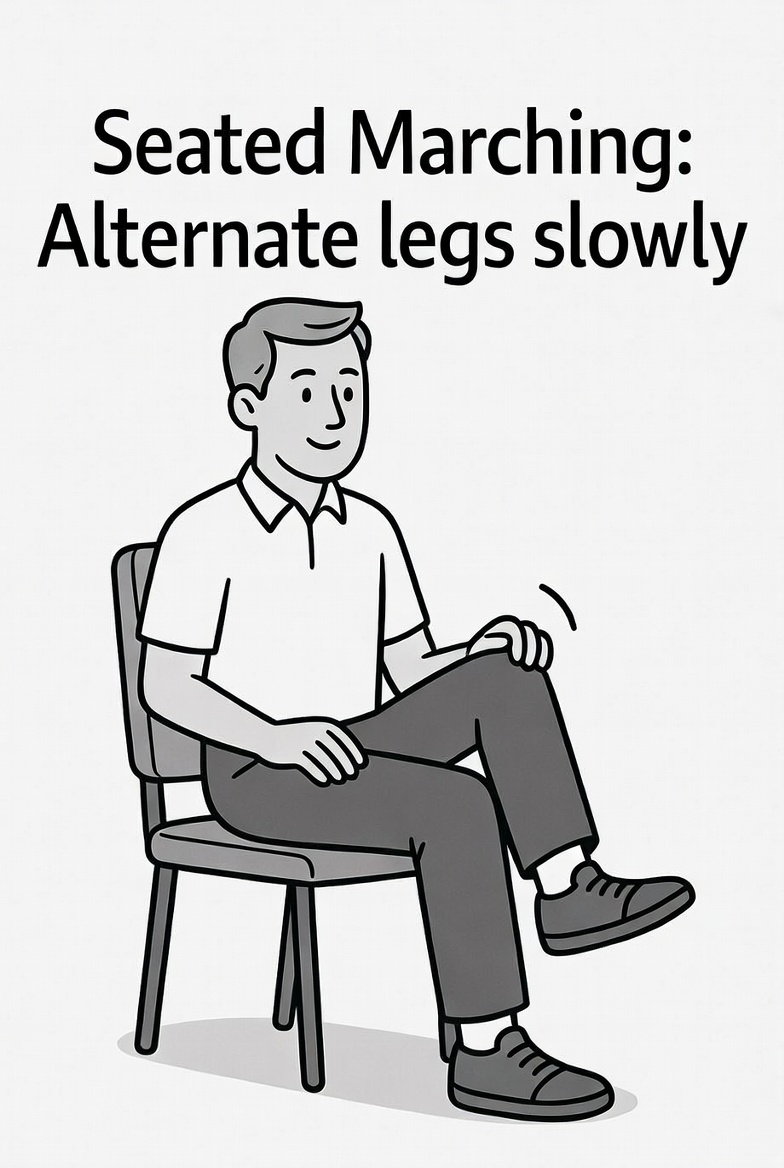
3. Seated Marching (Enhances Hip Mobility)
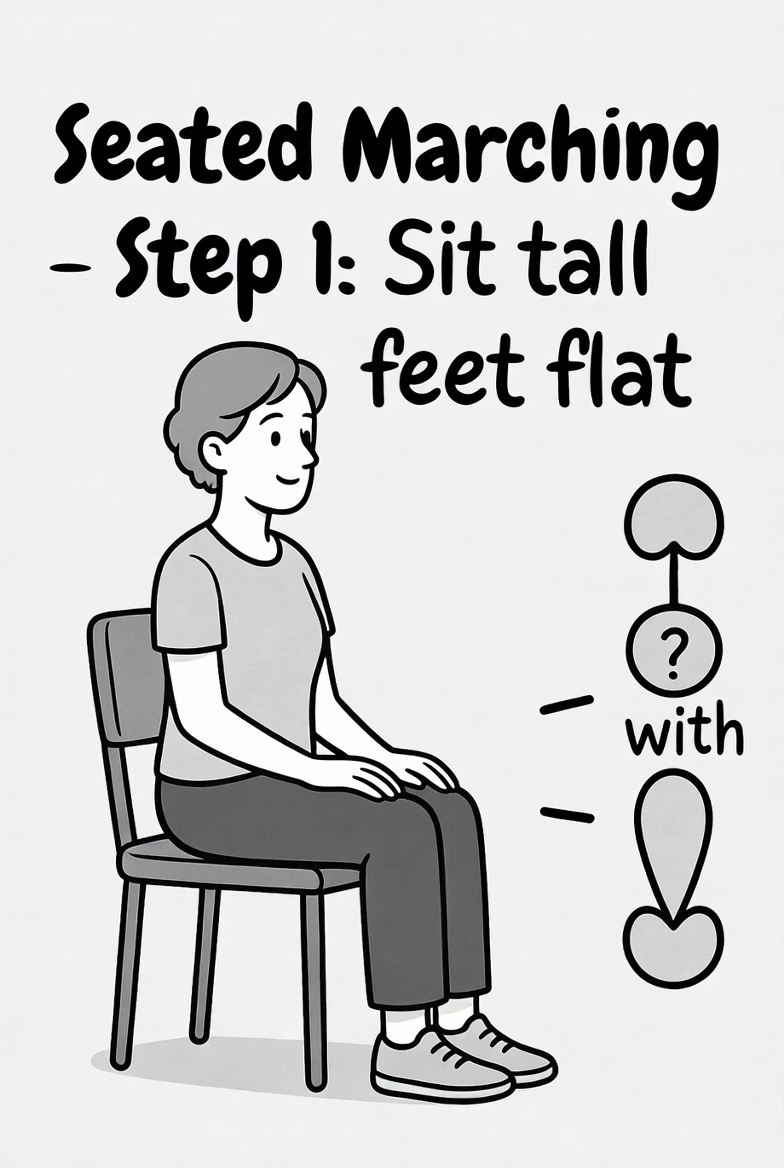
Sit comfortably on a chair. Slowly lift one knee toward your chest, then lower it. Alternate legs.

Benefits: Improves hip flexibility and circulation.

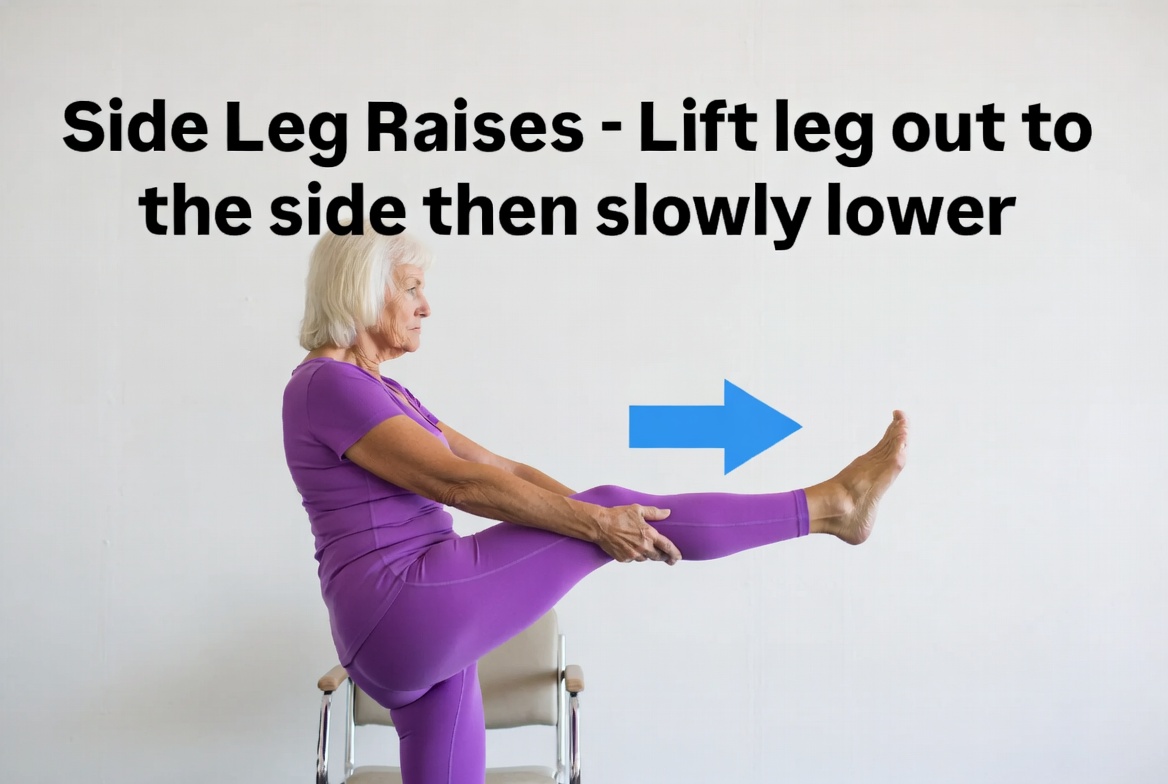
4. Side Leg Raises (Strengthens Hip Muscles)
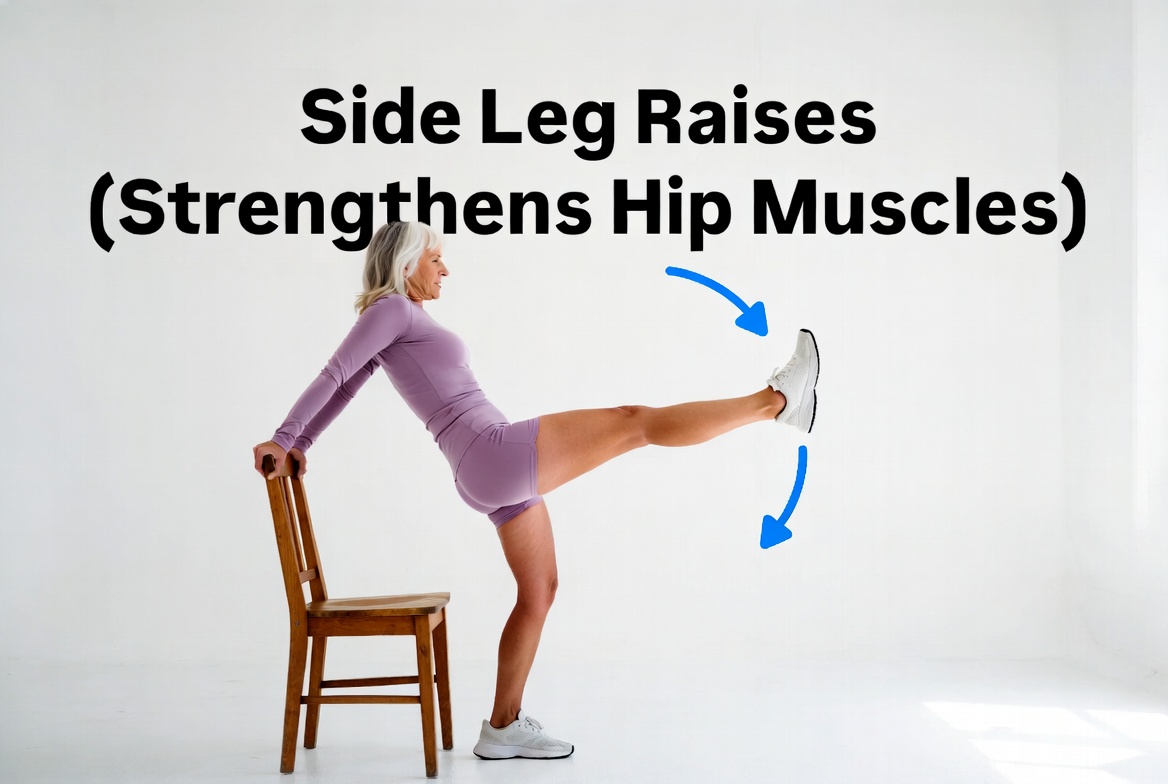
Stand straight and hold a chair for support. Lift one leg out to the side, then slowly bring it back.

Benefits: Improves balance and strengthens hip stabilizers.

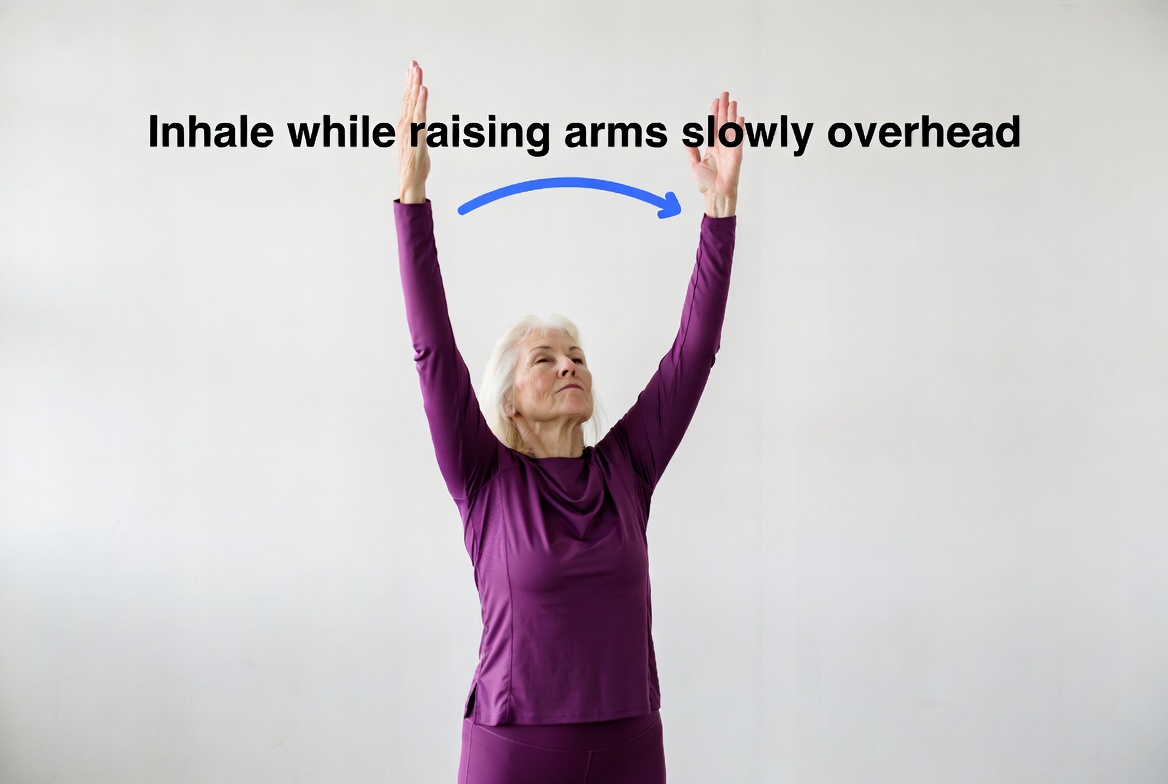
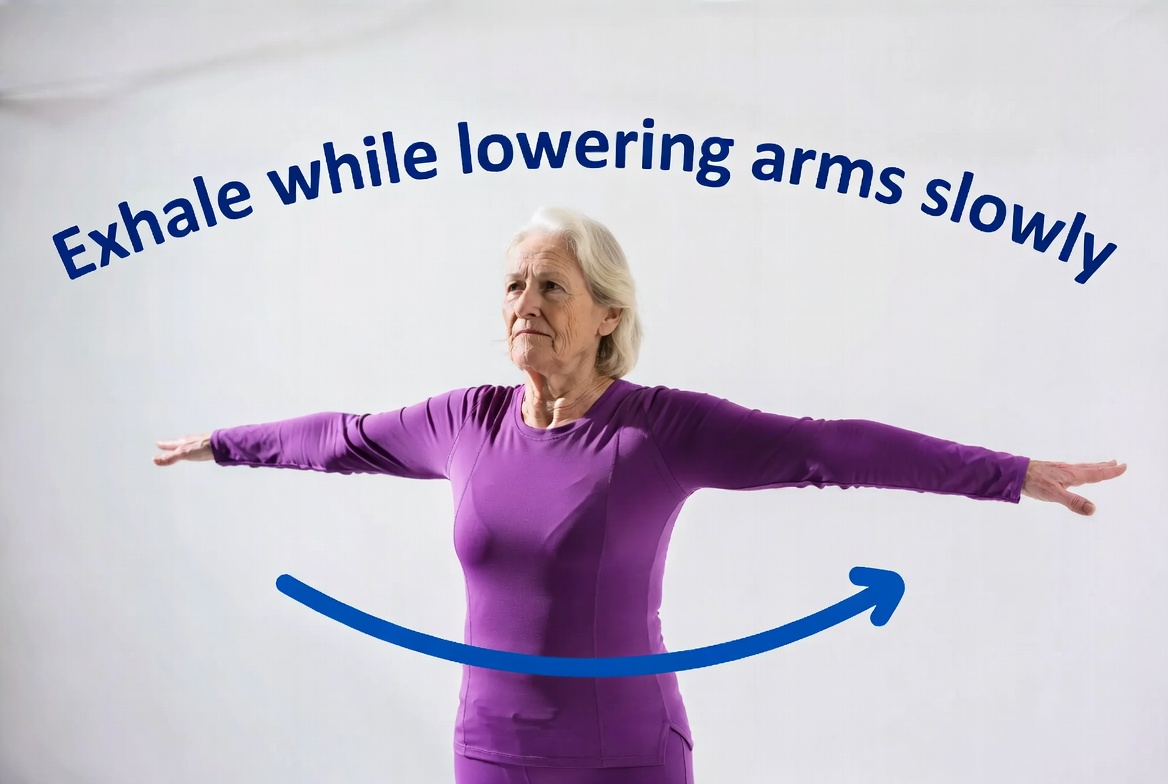
5. Arm Raises with Deep Breathing (Improves Coordination)
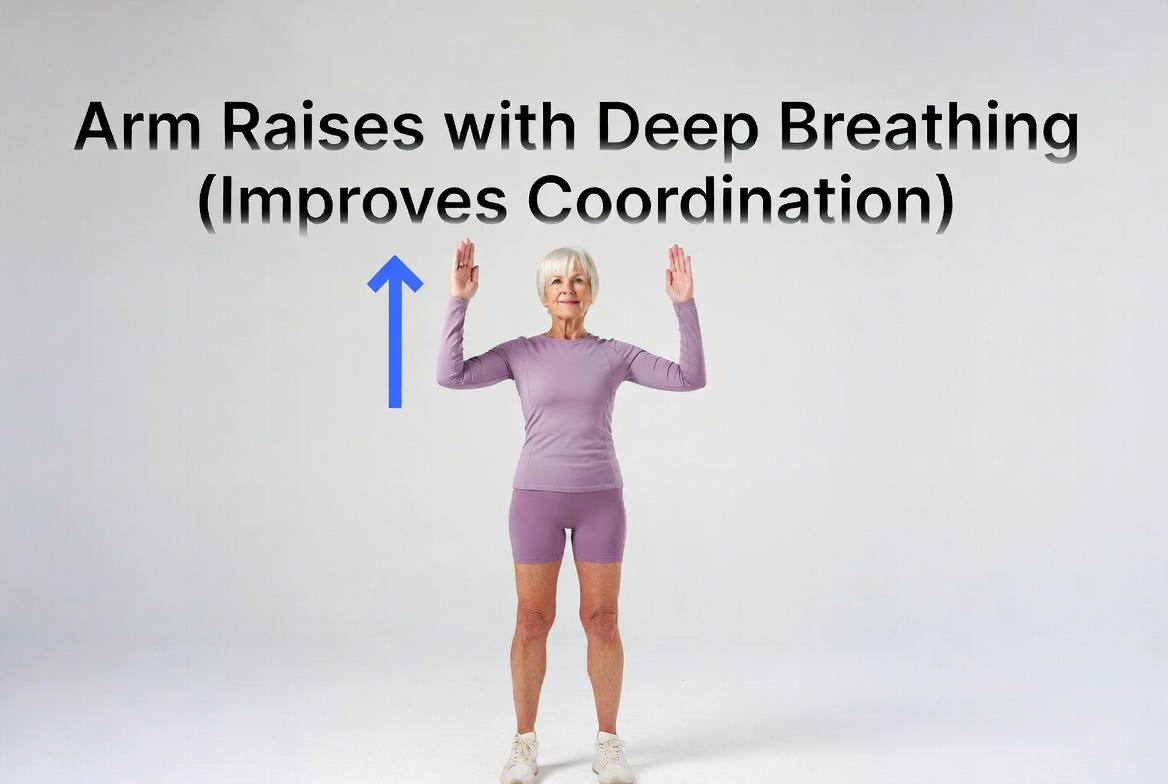
Raise your arms slowly overhead while inhaling, then lower them while exhaling.

Benefits: Enhances coordination and promotes relaxation.

Best Balance Exercises for Seniors at Home

If you want a simple balance exercise routine for seniors at home, start with exercises that provide support.

Try:

  1. Seated marching — 1 minute
  2. Sit-to-stand — 8 repetitions
  3. Standing side leg raises — 8 per side
  4. Heel raises — 10 repetitions
  5. Supported single-leg stand — 5–10 seconds per side
  6. Ankle circles — 8–10 per direction

Start with one set and rest whenever needed.

As your strength and confidence improve, you can gradually increase repetitions or duration.

Do not sacrifice safety for more repetitions.

Balance Exercises vs. Mobility Exercises

Balance and mobility exercises have different purposes, but they work well together.

Balance exercises

Balance exercises challenge your ability to maintain body control and stability.

Examples include:

  • Single-leg stands
  • Heel-to-toe walking
  • Heel raises
  • Supported standing exercises

Mobility exercises

Mobility exercises focus on comfortable movement of the joints and body.

Examples include:

  • Seated marching
  • Ankle circles
  • Gentle hip movements
  • Controlled leg movements

For seniors, combining mobility and balance exercises can create a more complete lower-body fitness routine.

Balance Training for Seniors: How Often Should You Practice?

For beginners, start with short sessions and gradually build your routine.

A practical starting point is:

  • 3–5 days per week
  • 10–20 minutes per session
  • Begin with one set of each exercise
  • Increase repetitions gradually as tolerated

You can also incorporate balance practice into everyday activities, such as standing from a chair, walking, or performing controlled heel raises.

Consistency is more important than performing difficult exercises.

How to Improve Balance and Mobility as You Age

Balance training works best when combined with other types of physical activity.

Consider including:

Walking

Regular walking can support cardiovascular fitness, leg strength, and everyday mobility.

Strength Training

Strengthening your legs, hips, and core can complement balance exercises.

You can use bodyweight exercises or resistance bands for seniors.

Flexibility Training

Gentle stretching can help maintain flexibility and comfortable movement.

Chair Yoga

Chair yoga combines gentle movement, flexibility, and controlled breathing and can be a useful option for seniors who prefer seated or supported exercise.

Low-Impact Cardio

Activities such as gentle cycling, swimming, or other low-impact exercises can help you remain active without relying on high-impact movements.

How to Choose the Best Balance Equipment for Seniors

If you are looking for the best balance equipment for seniors, consider your current ability before purchasing anything.

Look for equipment that offers:

  • A stable design
  • Non-slip surfaces
  • Appropriate difficulty
  • Easy setup
  • Comfortable use
  • Clear instructions
  • Suitable dimensions for your available space

A beginner may benefit more from a sturdy chair and resistance bands than from an advanced balance board.

If you already have good balance and are looking for a greater challenge, a balance pad or balance board may be worth considering.

The best balance equipment is the equipment you can use safely and consistently.

Commercial Guide: Which Balance Equipment Is Right for You?

Different products serve different purposes.

EquipmentMain purposeBeginner friendly?
Sturdy chairSupport during balance exercisesYes
Resistance bandsLeg and hip strengtheningYes
Balance padChallenging balance and stabilityUse caution
Balance boardAdvanced balance trainingUsually more challenging
Exercise matComfort during floor exercisesYes

If your primary goal is strength, resistance bands may be a useful starting point.

If your goal is balance challenge, a balance pad or balance board may be appropriate for some users.

If your goal is simply to exercise safely at home, a sturdy chair and comfortable exercise mat may be enough.

Safety Tips for Balance Exercises

Balance exercises require additional safety precautions because they intentionally challenge stability.

Follow these guidelines:

  • Exercise near a sturdy chair, countertop, or wall.
  • Keep your exercise area free of clutter.
  • Wear comfortable, non-slip footwear.
  • Start with both hands supported when necessary.
  • Move slowly and maintain control.
  • Avoid closing your eyes during balance exercises unless specifically instructed by a professional.
  • Do not attempt difficult balance exercises when you are tired or dizzy.
  • Stop if you feel unsafe or unusually unsteady.
  • Ask a qualified professional for guidance if you have significant balance problems.

When Should You Avoid Balance Exercises?

Speak with a healthcare professional before starting if you have:

  • A recent injury or surgery
  • Severe dizziness
  • Significant balance problems
  • Frequent falls
  • Severe weakness
  • A medical condition affecting your mobility

If you experience chest pain, severe shortness of breath, fainting, or sudden severe symptoms during exercise, stop and seek appropriate medical attention.

Frequently Asked Questions

What are the best balance exercises for seniors?

Some beginner-friendly options include supported single-leg stands, heel-to-toe walking, heel raises, sit-to-stand exercises, and standing side leg raises. The appropriate exercises depend on your balance ability and fitness level.

What are the best mobility and balance exercises for seniors?

A combination of seated marching, ankle circles, controlled leg movements, heel raises, sit-to-stands, and supported balance exercises can provide a well-rounded routine.

Can seniors do balance exercises at home?

Yes. Many balance exercises can be performed at home. However, safety is important. Use a sturdy support and keep the exercise area clear of obstacles.

What is the best balance equipment for seniors?

There is no single best product for everyone. A sturdy chair can provide basic support, resistance bands can help strengthen the legs and hips, while balance pads and boards can provide more challenging balance training.

Is a balance board good for seniors?

A balance board can provide a challenging stability workout, but it may not be appropriate for beginners or seniors with significant balance problems. Start with supported balance exercises and progress gradually.

Are balance pads safe for seniors?

Balance pads make exercises more challenging by creating an unstable surface. Seniors should use appropriate support and avoid using a balance pad if they cannot safely control their body on an unstable surface.

How often should seniors do balance exercises?

Many seniors can incorporate balance exercises several days per week. Beginners should start with short sessions and gradually increase duration and difficulty.

Final Thoughts

Maintaining balance and mobility is an important part of staying active and independent as you age.

Simple balance and mobility exercises for seniors such as seated marching, heel-to-toe walking, supported single-leg stands, side leg raises, sit-to-stands, heel raises, and ankle circles can be incorporated into a gentle home routine.

You do not need advanced equipment to get started.

Begin with exercises that match your current ability, use a sturdy support when necessary, and progress gradually.

If you want to make your home workouts more challenging, explore our guides to the best balance equipment for seniors, balance pads, balance boards, and resistance bands for seniors.

For more gentle senior fitness routines, explore our guides on low-impact exercises for seniors at home, chair yoga for seniors, and knee and hip pain exercises for seniors.

Start gently. Practice consistently. Build better balance and mobility one step at a time.

Disclaimer: This article provides general fitness and educational information and is not medical advice, diagnosis, or treatment. Consult a qualified healthcare professional for advice about your individual health or exercise needs.

Scroll to Top