
Best Wrist Brace for Arthritis, Carpal Tunnel & Tendonitis: 3 Top Picks
Wrist pain can make everyday activities such as typing, cooking, exercising, gripping objects, or even sleeping uncomfortable. A properly fitted wrist brace can provide support and help limit movements that aggravate the wrist.
But not every wrist brace is designed in the same way. Some are primarily made for nighttime support, while others are better suited to daytime activities. Some provide firmer stabilization, while others emphasize comfort and flexibility.
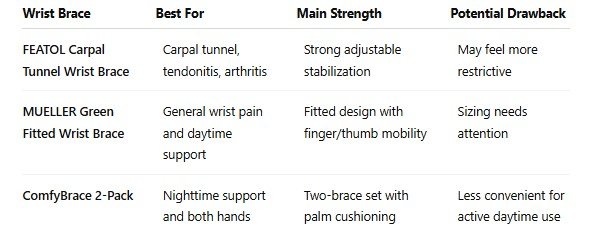
In this guide, we’ll compare three popular options:
- FEATOL Carpal Tunnel Wrist Brace Night Support
- MUELLER Sports Medicine Green Fitted Wrist Brace
- ComfyBrace 2 PACK Nighttime Pain Relief Wrist Brace
The goal is not simply to choose the most expensive brace. Instead, we’ll look at support, comfort, adjustability, nighttime use, and the type of wrist problem each brace may be best suited for.
Note: A wrist brace can provide support and symptom relief, but it does not treat every underlying cause of wrist pain. If pain is severe, persistent, worsening, or associated with significant swelling, numbness, weakness, or injury, consider getting medical advice.
Quick Comparison of the 3 Wrist Braces
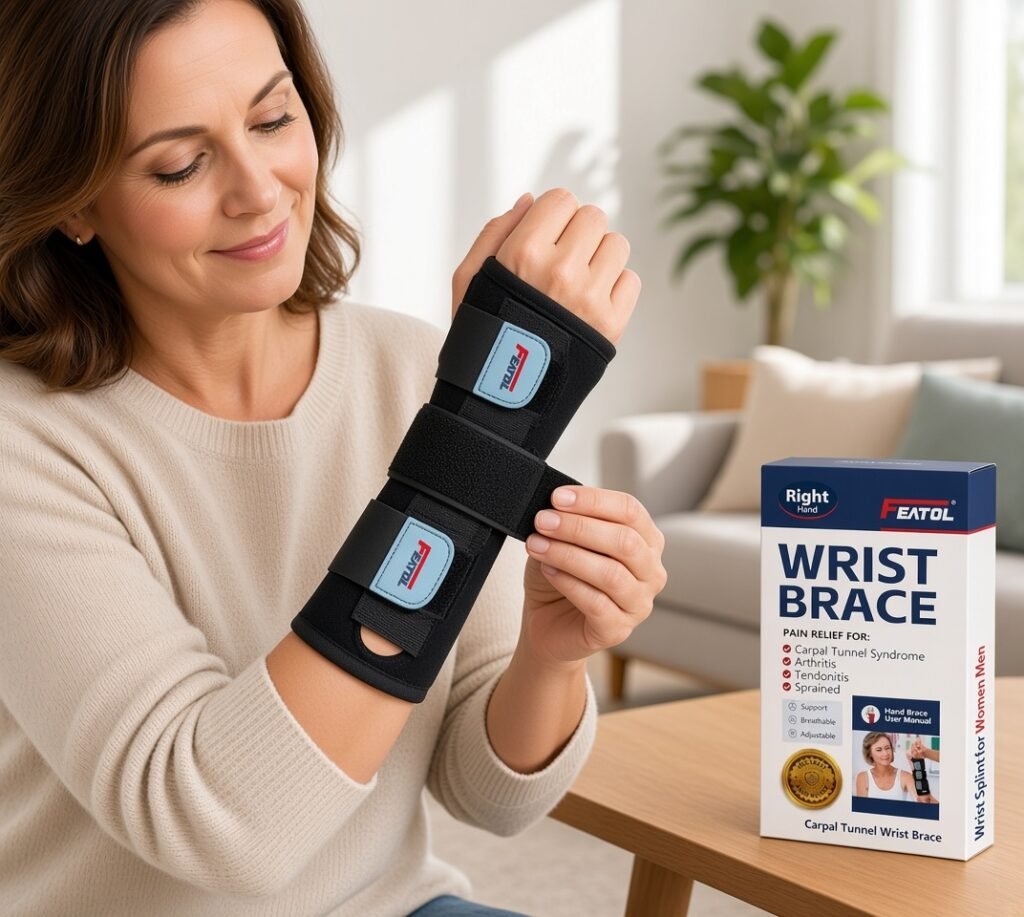
The FEATOL Carpal Tunnel Wrist Brace Night Support is designed for people looking for relatively firm wrist stabilization, particularly during sleep.
The brace uses adjustable straps and removable aluminum splints to help keep the wrist supported. FEATOL says the brace is designed for conditions including carpal tunnel syndrome, tendonitis, arthritis and wrist injuries. It is available in different sizes and for either the left or right hand.
Pros
- Adjustable straps allow you to customize the fit.
- Aluminum splints provide relatively firm stabilization.
- Available for both left and right hands.
- Breathable material is designed for extended wear.
- Suitable for nighttime use.
- Can also be used during some daily activities.
- Available in multiple sizes.
Cons
- A more structured brace may feel restrictive for some users.
- Correct sizing is important for comfort.
- The stronger stabilization may not be ideal if you want a very flexible wrist support.
- It is primarily a support brace rather than a replacement for treatment of an underlying condition.
Who may prefer FEATOL?
FEATOL may be a good choice if your priority is stronger wrist stabilization, particularly if wrist symptoms are worse at night or when the wrist remains in an awkward position.
For someone searching specifically for a wrist brace for carpal tunnel, this is one of the more relevant designs to consider. [Check FEATOL Wrist Brace on Amazon →]
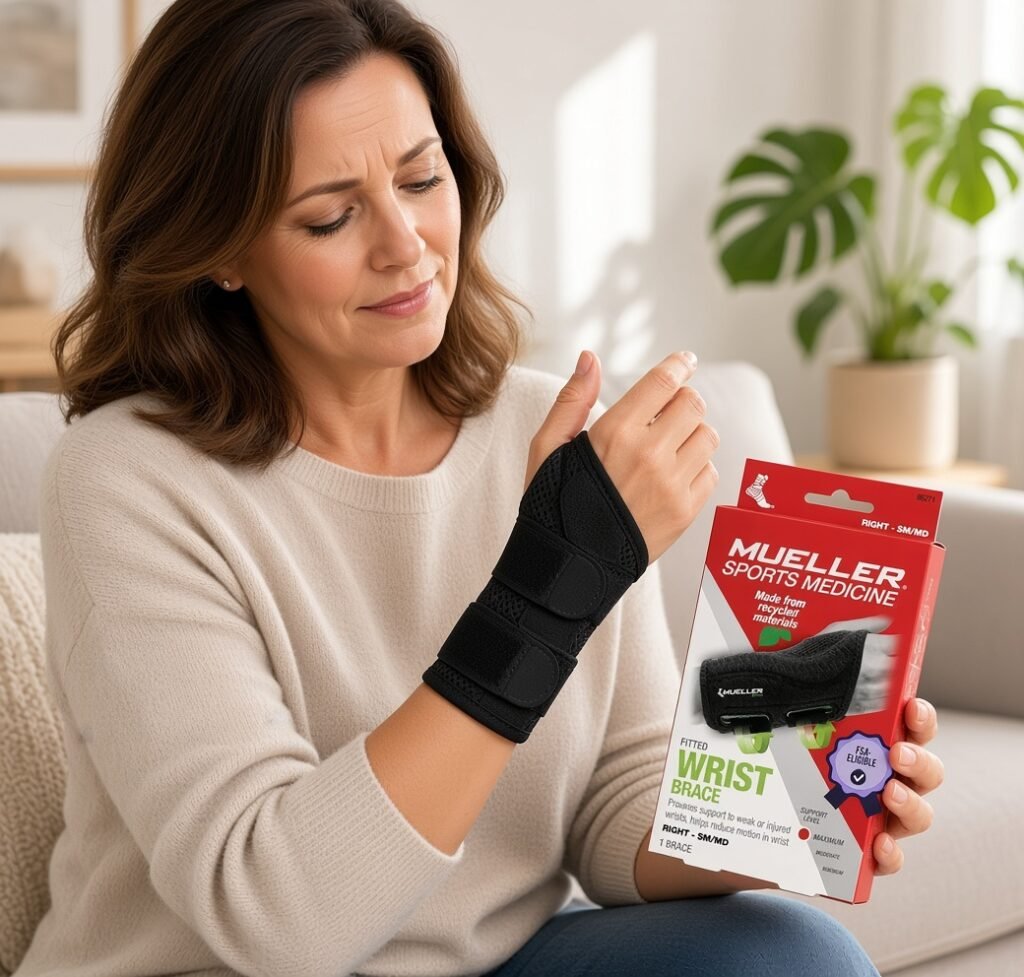
The MUELLER Green Fitted Wrist Brace takes a somewhat different approach. Instead of a bulky night splint, it has a fitted design intended to provide wrist support while allowing movement of the thumb and fingers.
MUELLER says the brace is designed to help with pain and swelling associated with carpal tunnel syndrome, general wrist pain, osteoarthritis and tenosynovitis. It uses adjustable straps and a slip-on design, and it can be worn during the day or at night.
The Small/Medium version is listed for wrists measuring approximately 5–8 inches, while the Large/XL version covers approximately 8–10 inches.
Pros
- Fitted design is less bulky than some rigid wrist splints.
- Allows full thumb and finger movement.
- Adjustable straps help customize the fit.
- Suitable for daytime or nighttime use.
- Designed for general wrist pain, carpal tunnel and osteoarthritis.
- Slip-on design makes it relatively straightforward to put on.
- The manufacturer uses recycled materials in parts of the Green product line.
Cons
- Correct sizing is especially important.
- Some users may prefer a more rigid brace for nighttime stabilization.
- It is designed for the right hand in the version discussed here, so check the exact model before purchasing.
- A fitted brace may not provide enough immobilization for certain injuries.
Who may prefer MUELLER?
The MUELLER brace may appeal to someone who wants support without completely restricting hand movement.
It can make more sense for someone dealing with general wrist discomfort who still needs to use the hand for everyday activities.[Check MUELLER Wrist Brace on Amazon →]
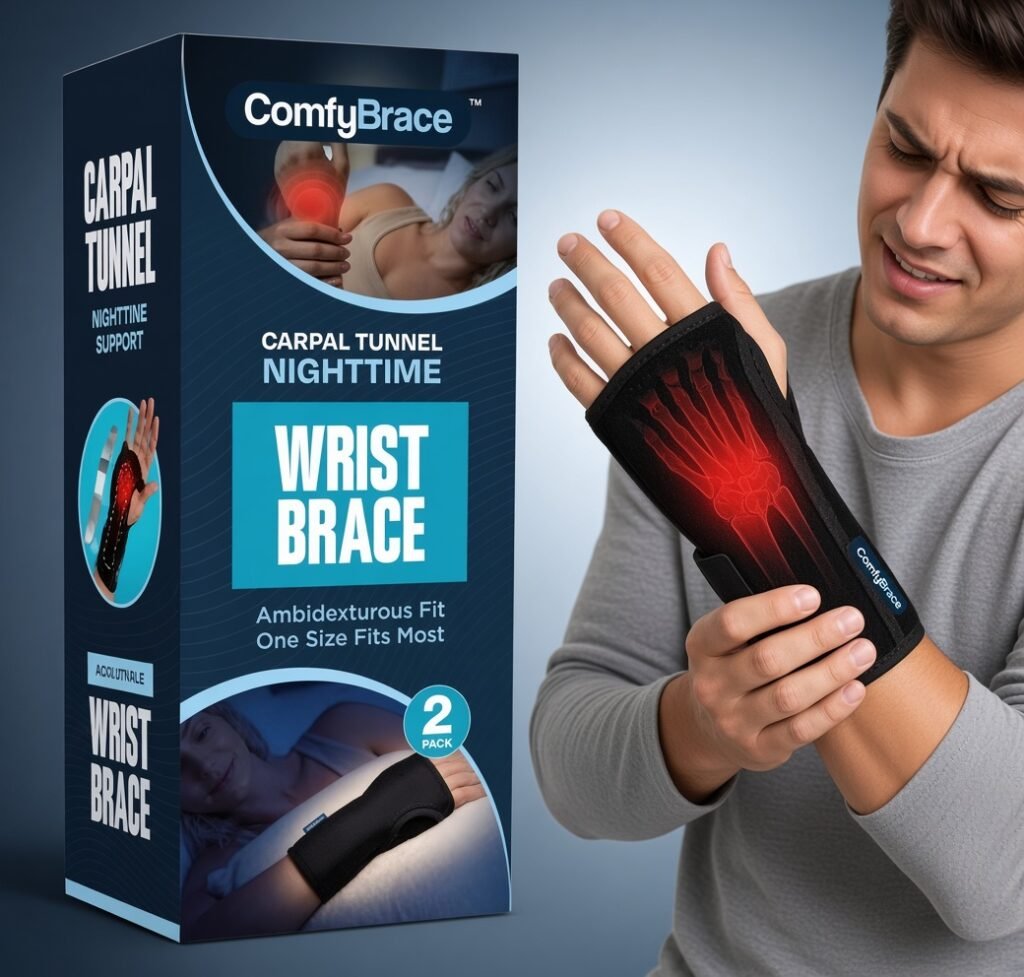
The ComfyBrace 2 PACK Nighttime Pain Relief Wrist Brace is particularly interesting if you have symptoms in both hands.
Unlike a single right-hand brace, the product is designed as a two-pack and can be used on either hand. It also includes a cushioned palm area intended to reduce pressure around sensitive areas. Available product information describes removable splints, breathable fabric and an adjustable design.
Pros
- Comes as a 2-pack for both hands.
- Designed specifically for nighttime use.
- Ambidextrous design can be convenient.
- Removable splints allow you to modify the level of support.
- Palm cushioning may improve comfort around pressure-sensitive areas.
- Breathable material is designed for overnight wear.
- Particularly attractive if both wrists need support.
Cons
- More focused on nighttime use than active daytime activities.
- Palm cushioning can make the brace feel bulkier.
- The one-size design may not provide the same level of precise sizing as a brace with several size options.
- It may be less convenient when typing, lifting, exercising or performing activities requiring a strong grip.
Who may prefer ComfyBrace?
ComfyBrace may be worth considering if you primarily want nighttime wrist support, particularly if you experience symptoms in both hands.
The two-pack can also be convenient because you don’t have to purchase separate left- and right-hand braces.[Check ComfyBrace 2-Pack on Amazon →]
FEATOL vs MUELLER vs ComfyBrace: Which Is Better?
There isn’t one wrist brace that is automatically best for everyone.
Your choice should depend on why your wrist hurts and when you need the support.
Best for stronger stabilization: FEATOL
If you want a brace with removable aluminum splints and multiple adjustable straps, FEATOL is an attractive option.
It may be especially useful for someone looking for a carpal tunnel wrist brace or a more structured support during nighttime use.
Best for everyday flexibility: MUELLER
If you want wrist support while maintaining relatively good thumb and finger movement, MUELLER Green Fitted Wrist Brace may be the better choice.
Its fitted construction makes it worth considering for general wrist pain and everyday activities.
Best for both hands at night: ComfyBrace
If both wrists are bothering you and nighttime comfort is your main priority, ComfyBrace 2 PACK has an obvious advantage.
The two-brace design means you can support both hands without buying two separate products.
Frequently Ask Questions
What Is the Best Wrist Brace for Carpal Tunnel?
For carpal tunnel symptoms, look for a brace that provides comfortable wrist stabilization, especially if symptoms become worse during sleep.
The FEATOL and ComfyBrace options are particularly focused on nighttime support, while the MUELLER brace offers a more fitted design that can be used during the day or night.
The best option depends on your preferred level of support, fit and whether you need one or two braces.
A wrist brace should feel supportive—not painfully tight.
What Is the Best Wrist Brace for Tendonitis?
A wrist brace for tendonitis can help limit movements that aggravate the wrist while allowing the area to rest.
FEATOL is worth considering if you want stronger stabilization. MUELLER may be preferable if you want a fitted design that permits finger and thumb movement.
Remember that tendonitis has different causes and locations, so a brace that works for one person may not be appropriate for another.
What Is the Best Wrist Brace for Arthritis?
For arthritis-related wrist pain, comfort and fit are especially important.
A brace may help support the joint and reduce uncomfortable wrist movement, but it should not be so tight that it increases discomfort or causes numbness or tingling.
For wrist arthritis, MUELLER is worth considering for everyday support, while FEATOL provides a more structured option. ComfyBrace may be attractive for people who mainly need nighttime support.
What About a Wrist Brace for Rheumatoid Arthritis?
Rheumatoid arthritis is different from ordinary wrist strain or an occasional sprain because it is an inflammatory autoimmune condition.
A wrist brace may provide support and comfort, but it should not be considered a treatment for rheumatoid arthritis itself.
If you are looking for a wrist brace for rheumatoid arthritis, comfort, proper sizing and medical guidance are more important than simply choosing the most rigid brace.
If wearing a brace increases swelling, pain, numbness or skin irritation, stop using it and seek professional advice.
Will a Wrist Brace Help With Wrist Pain?
It can.
A wrist brace may help by supporting the wrist and limiting movements that aggravate an irritated area. This can be particularly useful when wrist pain is associated with conditions such as carpal tunnel syndrome, certain types of tendon irritation or arthritis.
However, a brace does not automatically fix the underlying problem.
The important question is why your wrist hurts.
Wrist pain caused by repetitive activity may require changes to your workstation or exercise technique. Pain following an injury may require evaluation. Persistent numbness, weakness or severe pain should not simply be covered up with a brace.
Will a Wrist Brace Help With Wrist Pain at Night?
For some people, nighttime support can be particularly useful.
People sometimes sleep with their wrists bent, which may aggravate symptoms associated with conditions such as carpal tunnel syndrome. A wrist brace that keeps the wrist in a more neutral position may reduce uncomfortable positioning during sleep.
This is one reason FEATOL and ComfyBrace are worth considering for people whose symptoms are worse at night.
Is a Wrist Brace Supposed to Hurt?
No.
A wrist brace may feel snug, especially when it provides compression or stabilization, but it should not cause significant pain.
A brace that is too tight can create problems such as:
- Increased discomfort
- Numbness or tingling
- Skin irritation
- Swelling
- Reduced circulation
- Pressure points
If your fingers become numb, cold, unusually swollen or discolored, remove the brace and reassess the fit.
The goal is support—not excessive compression.
How Should a Wrist Brace Fit?
A good wrist brace should feel secure without cutting into your skin.
Before ordering, check the manufacturer’s sizing instructions and measure your wrist according to the instructions provided.
Also consider what you will be doing while wearing it.
For example:
For sleeping:
A more supportive brace may be acceptable because you are not using your hand for active tasks.
For typing or everyday activities:
A less restrictive fitted brace may be more comfortable.
For exercise:
A therapeutic wrist brace and a weightlifting wrist wrap are not necessarily the same thing. Choose a product designed for the activity you actually perform.
Wrist Brace vs. Wrist Band for Pain Relief
The terms “wrist brace,” “wrist support” and “wrist band” are sometimes used interchangeably online, but they can describe different products.
A wrist brace generally provides more stabilization and may include a splint.
A wrist band or wrap usually provides lighter compression or support and may allow greater movement.
If your primary goal is pain support for carpal tunnel, tendonitis or arthritis, look for a product specifically designed for that purpose rather than choosing a weightlifting wrist wrap simply because it is marketed as a wrist support.
Which Wrist Brace Should You Choose?
Here’s the simplest way to narrow down the three options:
Choose FEATOL if:
You want stronger stabilization, adjustable straps and a removable aluminum splint.
Choose MUELLER if:
You want a fitted wrist brace that allows thumb and finger movement and can be used during everyday activities.
Choose ComfyBrace if:
You mainly need nighttime support and want a two-pack that can be used on both hands.
There is no universal “best” wrist brace. The right choice depends on the cause of your wrist discomfort, how much stabilization you need, whether you need daytime or nighttime support, and how well the brace fits.
Wrist Pain and Gentle Exercise
Wrist pain doesn’t always mean you need to rely on a brace. Depending on the cause of your discomfort, gentle movement and appropriate exercise may also help you stay active and maintain mobility. If you want to explore other joint-friendly ways to exercise at home, read our guide to [low impact exercises for seniors at home].
Wrist Pain and Overall Joint Mobility
Sometimes wrist discomfort occurs alongside other joint problems, especially as we get older. If you’re also looking for gentle exercises to support your lower-body mobility and manage everyday joint discomfort, see our guide to [knee and hip pain relief exercises for seniors].
Combine Wrist Support With Gentle Movement
A wrist brace can provide support when you need to limit irritating wrist movements, but maintaining overall mobility is also important. Gentle, controlled exercise can be part of an active lifestyle for older adults. For more low-impact movement ideas that can be performed while seated, explore our guide to [chair yoga exercises for seniors].
Final Decisions
A wrist brace can be a useful tool for people dealing with wrist discomfort, particularly when the goal is to support the joint and reduce aggravating movements.
Among these three options, FEATOL stands out for stronger adjustable stabilization, MUELLER for fitted everyday support, and ComfyBrace for two-hand nighttime use.
Before purchasing, check the size, hand orientation, intended use and level of support. Most importantly, don’t use a brace to ignore persistent or worsening symptoms.
If wrist pain continues, or you experience significant numbness, weakness, swelling or pain after an injury, consider speaking with a qualified healthcare professional.
The best wrist brace is not necessarily the most rigid one—it is the one that provides appropriate support while remaining comfortable enough for you to use correctly.